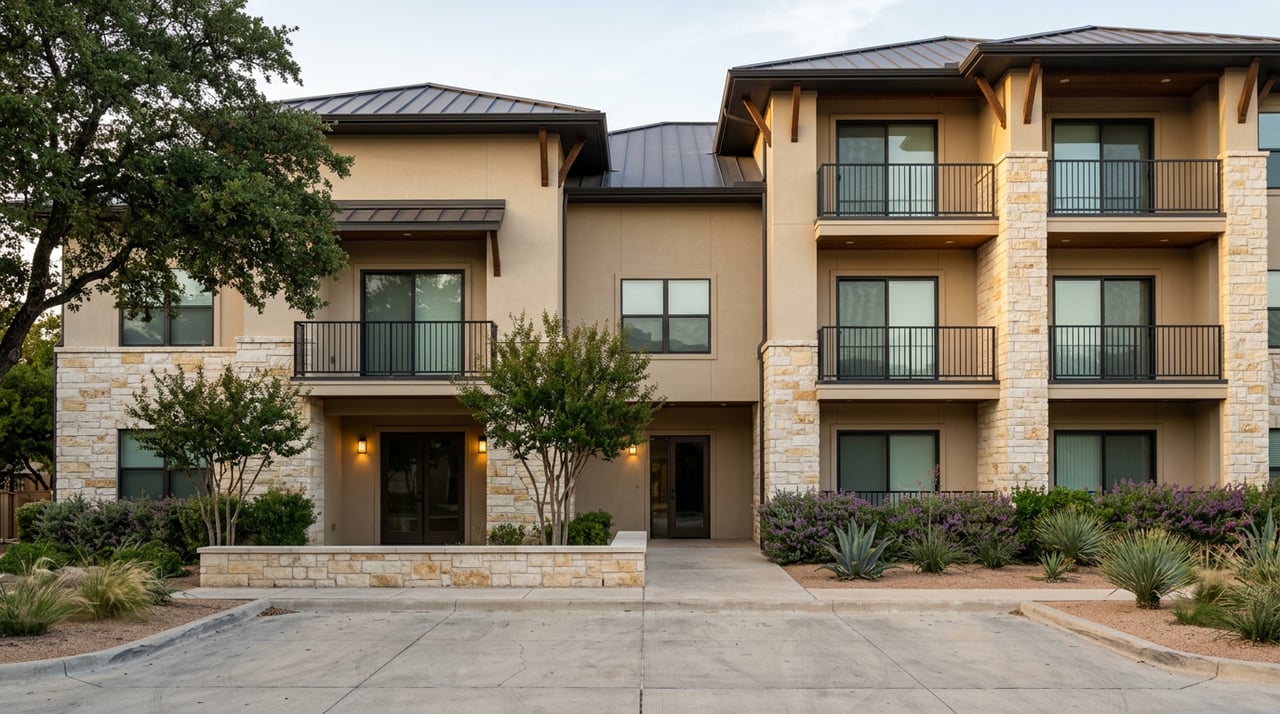
Picture yourself stepping out to a marina sunrise, tee times on your calendar, and a lock-and-leave condo that handles the rest. If you are eyeing Horseshoe Bay for a second home or investment, you might be sorting through questions about membership, HOA fees, financing, and short-term rental rules. This guide gives you a clear path. You will learn the condo types available, how club access really works, what to check in HOA documents, how financing differs for resort condos, and how to plan your total monthly cost. Let’s dive in.
What you can buy in Horseshoe Bay
Resort-operated residences
Horseshoe Bay Resort offers condo-style lodging and ownership products near the heart of the resort. The resort’s Residences include a mix of layouts and service levels, and they sit next to the core amenities. You can review current offerings on the resort’s page for The Residences at Horseshoe Bay Resort.
Within this collection, the Signature product highlights upscale three-bedroom floorplans, concierge-style services, and exclusive amenity perks. Signature guests are advertised to receive Yacht Club access and a private pool. If you plan to own or stay in this tier, expect premium finishes and a resort-forward experience. Always confirm what is included for owners versus guests.
Resort-core condos owned by individuals
You will also find privately owned condominiums in the resort core, such as the Waters and Island Drive buildings. Units often range from one to three bedrooms with lock-and-leave designs. Typical sizes vary, with many one and two bedroom footprints in the 700 to 1,600 plus square foot range depending on building and plan. Views, floor level, and proximity to the marina or Yacht Club can move prices significantly. If you want short-term rental potential, check each building’s current HOA rental policy before you buy.
Neighborhood condos outside the core
Beyond the immediate resort footprint, Horseshoe Bay includes smaller condo and fee-simple developments inside residential neighborhoods. These typically include fewer direct resort services. Access to resort amenities usually requires a separate club membership or guest privileges through the resort. Use the resort’s public pages to orient yourself to where amenities sit relative to each neighborhood.
Membership and golf access explained
Owning a condo and having full club access are not always the same thing. The Club at Horseshoe Bay has tiered categories for golf, social, racquet sports, and more. You can view membership categories and contact the club through the Club at Horseshoe Bay “Belong” page. Initiation fees and dues are part of joining, and details are typically provided directly by membership services.
Some properties or promotions may bundle or credit a membership as part of a sale. For instance, select new communities in the area have advertised membership incentives for buyers in their materials. You can review one such approach on Atten Hill’s membership overview. Terms vary by development and by deal, so confirm transferability and whether any initiation is prepaid or due at closing.
Signature Residences also advertise specific perks for guests, including Yacht Club access. That shows how certain products deliver enhanced access through resort programs. It does not automatically mean an owner receives permanent member privileges to all club amenities or unlimited golf. Golf access with priority tee times is generally tied to the correct club membership tier.
What to confirm before you buy
- Ask the seller or developer which, if any, club membership is included in the purchase.
- If membership is not included, request the current initiation fee and dues schedule from the club membership office.
- Verify whether your ownership confers member rights, resort guest access, or both, and for how long.
HOA costs and documents to review
Monthly HOA fees vary by building and service level. In the resort core, representative Waters listings have shown fees in a rough range of about 600 to 900 dollars per month, sometimes reported as an annual figure. Use these figures to frame your monthly budget, and verify what your specific HOA covers.
What fees often cover
- Common area maintenance and landscaping
- Building exterior insurance
- Pool or shared facility upkeep
- Some common-area utilities
Owners typically still carry interior coverage (an HO-6 policy), personal utilities, and any special assessments. To understand insurance obligations, request the master policy and check what the interior is required to cover. Texas condominium rules and underwriting standards expect adequate master coverage, and owners often need an HO-6 to fill gaps. You can read the state’s condo statute framework in Texas Property Code Chapter 82.
The essential HOA package
Ask for these items during your option period:
- Declarations, bylaws, rules and any amendments
- Current budget and most recent financials
- Reserve study and reserve contribution schedule
- Master insurance declarations and fidelity bonds
- Minutes from the last 12 months
- Any pending or threatened litigation disclosures
- Rental restrictions and the most recent resale certificate
Red flags that affect financing and resale
Lenders and buyers pay close attention to condo project health. Elements that often trigger tighter underwriting or reduced buyer demand include:
- Hotel-like operations, daily or very short-term rentals, or front-desk services that create a condotel profile
- High owner delinquency on dues, inadequate reserves, or active litigation
- Excessive commercial space
You can review agency considerations in Fannie Mae’s condo and co-op requirements overview. If a project is deemed non-warrantable, many mainstream conventional loans will not apply or will require higher down payments and rates through specialty programs.
Financing steps that save time
Warrantable vs non-warrantable
Financing hinges on whether the project meets agency guidelines for conventional loans. Early in your search, have your lender run a project review and request the condo questionnaire and HOA documents. This can tell you if you are dealing with a warrantable project or if you need a portfolio or non-warrantable solution. Fannie Mae’s condo requirements resource outlines the common checks.
FHA and VA paths
Many condo projects are not fully approved for FHA. FHA does allow a Single-Unit Approval path for certain units when the project is not otherwise approved, subject to FHA limits and conditions. You can check project and unit paths using HUD’s FHA condo lookup tool. VA has its own approval process and list for condo projects, so VA buyers should confirm early as well.
Down payments and loan types
Down payment and rate expectations vary by use and by project eligibility:
- Primary residence conventional loans can allow low down payments if the project qualifies.
- Second-home loans often require larger down payments, commonly 10 percent or more.
- Investment purchases often require 15 to 25 percent down, lender and project dependent.
- Condotels or non-warrantable condos usually require specialty loans with higher rates and minimum down payments that are often 20 percent or higher. See an overview of how non-warrantable condo loans differ in this condo mortgage explainer.
Ask your lender to document any overlays and down payment impacts in writing. Have them secure the condo questionnaire and budget/insurance package early. Many lenders will not proceed to final underwriting without these items.
Short-term rentals and permits
If you plan to Airbnb or Vrbo your condo, check two layers of rules. First, the City of Horseshoe Bay requires an annual Short-Term Rental Permit for stays under 30 days. The permit currently carries a 600 dollar annual fee and requires a local responsible party who can respond to complaints within one hour. You can see current rules and steps on the city’s Short-Term Rentals page.
Second, your HOA’s declaration and rules may cap or prohibit short-term rentals. Some resort-managed products also require enrollment in a resort rental program that has its own terms. Make sure your intended use is allowed by the city, the HOA, and any resort agreements before you underwrite income or write an offer.
What drives condo value in Horseshoe Bay
- Amenity and membership access. Properties that include or secure club membership, and those that offer reliable marina or Yacht Club proximity, often command a premium.
- View and water adjacency. Units with strong lake views or close marina access price above similar square footage that is farther from the water.
- Carry and operating costs. HOA fees, special assessments, and resort or club dues change net ownership cost and reduce net yield for investors.
- Entry price spectrum. Inside the resort core, representative condo prices have spanned from the mid 200,000s for smaller one-bedroom units to more than 1 million dollars for larger, high-view condos. Many buyers find condos offer a lower cash entry point than lakefront single-family homes, with the tradeoff of higher monthly HOA and possible club fees.
Monthly cost worksheet (example)
Here is a simple illustration using a realistic Horseshoe Bay resort-core condo scenario. Adjust with your lender and HOA for accuracy.
- Purchase price: 525,000 dollars
- Down payment: 10 percent (second home), loan amount 472,500 dollars
- Estimated rate and term: 6.75 percent, 30-year fixed
- Estimated principal and interest: about 3,064 dollars per month
- HOA dues: 750 dollars per month
- Property taxes: placeholder 700 dollars per month
- Owner HO-6 insurance: placeholder 50 dollars per month
Total estimated monthly cost: about 4,564 dollars per month
Note how HOA and taxes change the picture. If dues are 900 dollars instead of 750, or if taxes run higher, the total moves quickly. Build your budget with room for changes in dues, insurance, and assessments.
Your step-by-step plan
Define use and must-haves. Decide if this is a personal retreat, a rental, or both. That choice shapes location, HOA fit, and financing.
Engage a lender early. Ask for a written plan on project eligibility, down payment, rate, and timing. Have them request the condo questionnaire and HOA package up front.
Verify membership and access. Confirm in writing what your purchase includes. If no club membership is included, ask the club for current initiation and dues.
Review STR rules. Match your plan to the city’s permit, your HOA rental policy, and any resort program requirements. Start the STR application plan if needed.
Inspect HOA health. Read the budget, reserve study, insurance, minutes, and rules. Look for pending assessments, litigation, or underfunded reserves. Use Texas Property Code Chapter 82 as a reference for condo governance concepts.
Compare total monthly costs. Use the worksheet above to test different buildings and membership options.
Write a clean offer. Include timelines and contingencies for HOA review and membership confirmation. Coordinate appraisal and lender project review.
Ready to tour condos in Horseshoe Bay?
We live and work in the Highland Lakes and help buyers compare resort products, membership paths, HOA costs, and rental rules so you can buy with clarity. If you are weighing a Waters condo against a Signature Residence or a neighborhood option, we will walk you through true monthly costs, project eligibility with your lender, and the right terms to protect your purchase.
Let’s match you with the right lock-and-leave lifestyle. Reach out to McAlister Realty to Request a Market Consultation.
FAQs
What types of resort condos can I buy in Horseshoe Bay?
- You will see resort-operated Residences near the core amenities, privately owned condos like the Waters and Island Drive buildings, and neighborhood condos outside the core that may require separate club membership for access.
Does buying a condo include golf membership at Horseshoe Bay?
- Not by default; club access is handled through separate membership tiers with initiation fees and dues, so confirm in writing whether your purchase includes any membership or only resort guest access.
Can I rent my Horseshoe Bay condo on Airbnb or Vrbo?
- Short-term rentals under 30 days require a city permit with a 600 dollar annual fee and a one-hour response requirement, and your HOA or resort agreement may add limits or rules, so verify all layers before relying on rental income.
What does “non-warrantable condo” mean for my loan?
- Non-warrantable projects do not meet standard agency rules, which usually means you need a portfolio or specialty loan with higher down payment and rate, so have your lender run a project review early.
Which HOA documents should I review before I buy?
- Ask for the declaration, bylaws, rules, amendments, budget and financials, reserve study, master insurance, board minutes, and the resale certificate to spot fees, coverage gaps, and upcoming assessments.
How do HOA dues compare across Horseshoe Bay condos?
- Dues vary by building and service level; in the resort core, representative Waters listings have shown about 600 to 900 dollars per month, but always verify what a specific HOA covers and whether assessments are planned.