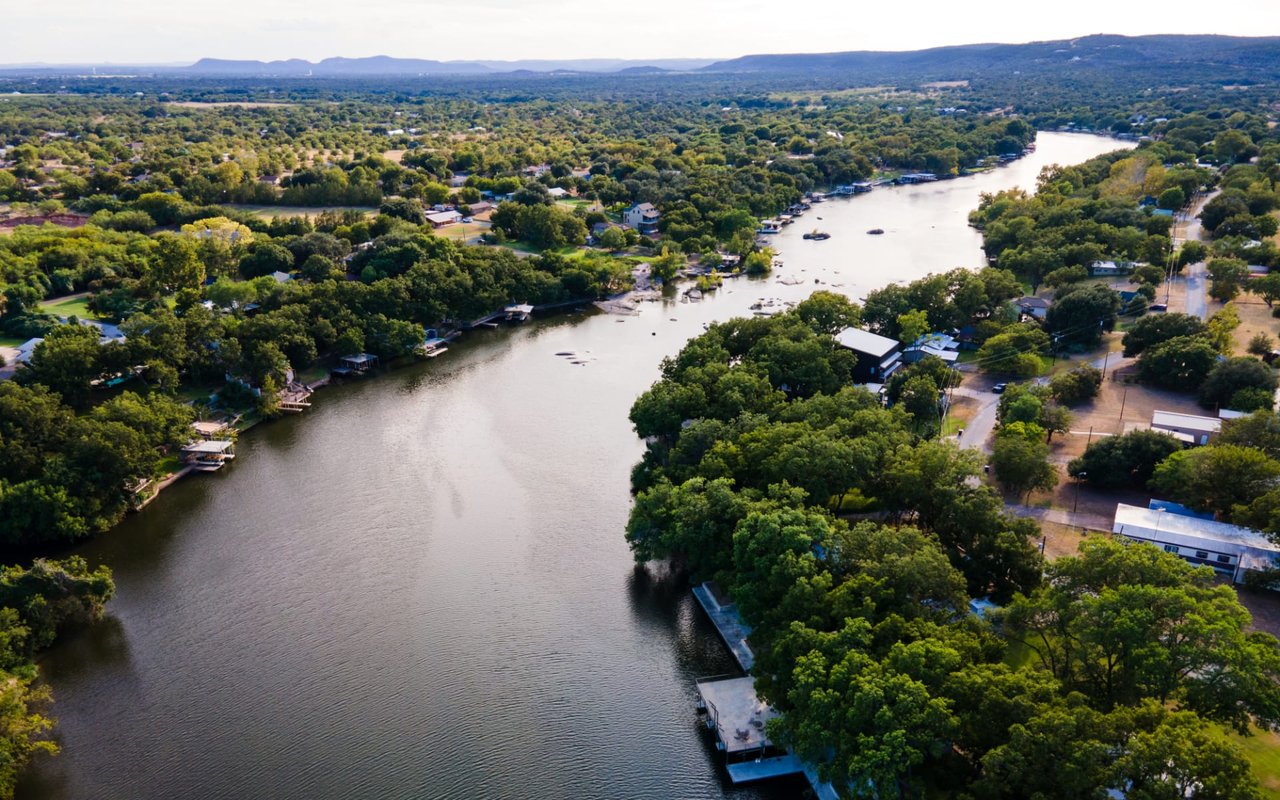
Wondering if a Lake LBJ property can legally work as a short-term rental? Around Kingsland, the answer is rarely a simple yes or no. Rules can shift based on the exact parcel, county lines, city limits, and even private deed restrictions. This guide will help you understand the main short-term rental rules around Kingsland and Lake LBJ so you can ask better questions, avoid surprises, and move forward with more confidence. Let’s dive in.
Why location matters first
Around Kingsland and Lake LBJ, jurisdiction is the starting point for any short-term rental plan. Kingsland is an unincorporated area in southwest Llano County, and some Kingsland-area parcels extend into Burnet County.
That means Lake LBJ is not one uniform short-term rental market. A property on unincorporated land may follow county and state rules, while a home inside Horseshoe Bay or Marble Falls may also need to follow city ordinances.
Kingsland is not one rule set
If you are buying near Kingsland, you need to confirm the exact parcel location before assuming anything about rental use. The rules can differ based on whether the home sits in unincorporated Llano County, on the Burnet County side of the corridor, or within a nearby city.
For many buyers, this is the biggest early mistake. A home may look ideal for weekend rentals, but its actual location can change the taxes, permits, and operating rules that apply.
State hotel tax rules in Texas
Texas imposes a 6% state hotel occupancy tax on lodging stays of fewer than 30 consecutive days. This applies to short-term residential rentals such as houses, condos, and apartments.
If a guest stays for 30 or more consecutive days as a permanent resident, that stay is exempt from the state hotel occupancy tax. The Texas Comptroller also notes that a booking platform may collect and remit the state tax if it has an agreement to do so. If not, the owner is responsible.
State hotel occupancy tax returns are generally due on the 20th day of the month after the reporting period ends. Some qualifying taxpayers may file quarterly instead of monthly.
Llano County rules for Kingsland-area properties
If your property is in unincorporated Llano County, county hotel occupancy tax rules likely come into play. Llano County levies a 4% hotel occupancy tax on lodging outside municipalities.
The county defines lodging broadly. Its rules cover hotels, motels, tourist homes, tourist courts, lodging houses, inns, condominiums, cabins, cottages, manufactured homes, rooming houses, and bed-and-breakfasts.
For owners, one detail matters more than many people expect: cleaning fees and pet fees are included in taxable receipts under Llano County rules. That can affect how you budget and report revenue.
Llano County follows a monthly or quarterly reporting structure, but its deadlines differ from the state. Monthly filers pay by the 31st of the following month, and quarterly filers pay by the last day of the month following the quarter.
The county also requires a report even when no tax is due. It has registration and payment portals for new short-term rentals, which signals that the county expects active compliance rather than informal operation.
Burnet County properties follow different county rules
Some Lake LBJ properties fall on the Burnet County side of the area. For those properties, Burnet County has its own hotel occupancy tax program, and its county regulations show a 5% county hotel occupancy tax rate.
This is another reason exact address verification matters. On the Burnet County side, county and city boundaries help determine which hotel tax program applies.
City rules can add another layer
If a property is inside city limits, city short-term rental rules may apply on top of state and county tax obligations. Two nearby Lake LBJ cities with defined short-term rental frameworks are Horseshoe Bay and Marble Falls.
Horseshoe Bay short-term rental rules
Horseshoe Bay requires an annual short-term rental permit for homes rented for fewer than 30 consecutive days. The current annual permit fee is $600.
The city says a permit is required if the home is actively advertised as a short-term rental, even if there are no open dates on the calendar. Rentals advertised for stays longer than 30 consecutive days do not require a license.
Horseshoe Bay does not cap the total number of short-term rentals in the city, and it does not limit how many a single owner may own. Still, each short-term rental needs its own permit.
The city also has active operating rules. The owner, operator, or designee must be able to respond to complaints within one hour. Its ordinance summary also includes controls related to occupancy, parking, noise, and bans on parties or special events.
For occupancy, the city indicates a limit of two people per bedroom plus two. That matters if you are evaluating a property’s practical rental capacity rather than just whether the use is allowed.
Horseshoe Bay states that it does not collect a local hotel occupancy tax. Even so, owners still need to review all applicable state and county obligations.
Marble Falls short-term rental rules
Marble Falls requires short-term rental registration for properties in residential zoning districts. The city requires a permit before the property can be used or advertised as a short-term rental.
The current permit fee is $175, permits must be renewed annually, and all short-term rentals must be inspected before issuance or renewal. That makes Marble Falls a more document-heavy and process-driven environment than many buyers expect.
The application asks for:
- Owner and operator or local responsible party information
- A plot plan
- A floor plan with emergency evacuation routes
- Proof of insurance
- HOA or POA information, if any
- Host rules
Marble Falls also collects a 7% hotel occupancy tax on short-term rentals. Quarterly reports and remittances are due by the last day of the month after each quarter.
The city’s ordinance summary states that occupancy is capped at two persons per bedroom plus two additional persons, with a hard maximum of 12 occupants. It also limits parking and the minimum rental period.
HOA rules may be the real deciding factor
For many Lake LBJ buyers, the most important rule is not always the city or county rule. It is often the recorded deed restriction or HOA covenant.
Texas law allows property owners’ associations to enforce recorded restrictions related to occupancy or leasing. Associations may also request basic lease and tenant contact information, though the law does not require the association to approve the tenant.
In practical terms, a property can be allowed from a city or county standpoint and still be limited or prohibited by private covenants. Horseshoe Bay’s official FAQ reinforces this by directing owners to subdivision and private restriction materials.
That is why recorded deed restrictions deserve the same level of review as tax and permit rules. If you are buying with rental income in mind, private restrictions can shape the real use case just as much as local government compliance.
What buyers should verify before closing
If you are considering a short-term rental purchase around Kingsland or Lake LBJ, it helps to treat due diligence as a layered checklist. The goal is to confirm the property’s legal setting before you make assumptions about income potential.
Start with these questions:
- Is the property in Llano County or Burnet County?
- Is it inside city limits or on unincorporated land?
- Does the city require a permit before advertising or renting?
- Which hotel occupancy taxes apply?
- Are there HOA rules or deed restrictions that limit leasing or occupancy?
- Are there operating rules on occupancy, parking, noise, or events?
A simple way to think about the split
For Kingsland-side properties, the default expectation is usually state hotel occupancy tax plus Llano County hotel occupancy tax if the parcel is outside municipal limits. City permitting becomes relevant when the property is inside Horseshoe Bay, Marble Falls, or another incorporated jurisdiction.
Across Lake LBJ, the core split is not the lake itself. The split is the parcel’s jurisdiction: Llano County versus Burnet County, and unincorporated land versus city limits.
Why this matters for your buying strategy
If you are shopping for a lake house, second home, or investment-minded property, short-term rental rules should be part of the conversation early. They can affect carrying costs, setup time, permitted occupancy, and whether a property fits your goals at all.
This is especially true in the Highland Lakes, where waterfront, resort-adjacent, and neighborhood-specific details can change quickly from one address to the next. A property’s view, dock, or location on the water may catch your eye first, but the parcel’s legal framework is what helps you plan with confidence.
When you are comparing opportunities around Kingsland, Horseshoe Bay, Marble Falls, and the broader Lake LBJ corridor, a local, parcel-level review can help you avoid expensive assumptions. That kind of upfront clarity is often what separates a smooth purchase from a frustrating one.
If you are thinking about buying or selling around Lake LBJ and want local guidance grounded in the details that matter, McAlister Realty is here to help you evaluate properties with a clear, practical view of the market.
FAQs
What short-term rental taxes usually apply in Kingsland, Texas?
- For properties in unincorporated Kingsland in Llano County, the usual starting point is the 6% Texas state hotel occupancy tax plus the 4% Llano County hotel occupancy tax on stays of fewer than 30 consecutive days.
What short-term rental permit is required in Horseshoe Bay, Texas?
- Horseshoe Bay requires an annual short-term rental permit for homes rented for fewer than 30 consecutive days, and the current annual permit fee is $600.
What short-term rental permit is required in Marble Falls, Texas?
- Marble Falls requires short-term rental registration and a permit before a property in a residential zoning district can be used or advertised as a short-term rental. The current permit fee is $175, and annual renewal and inspection are required.
Can an HOA restrict short-term rentals around Lake LBJ?
- Yes. Texas law allows property owners’ associations to enforce recorded restrictions related to occupancy or leasing, so private covenants can limit or prohibit short-term rentals even if city or county rules would otherwise allow them.
Why does parcel location matter for short-term rentals near Lake LBJ?
- Parcel location determines whether the property falls under Llano County or Burnet County rules, whether it is inside city limits, and which taxes, permits, and operating requirements apply.
Do cleaning fees count toward hotel occupancy tax in Llano County?
- Yes. Llano County’s rules state that cleaning fees and pet fees are included in taxable receipts for hotel occupancy tax purposes.