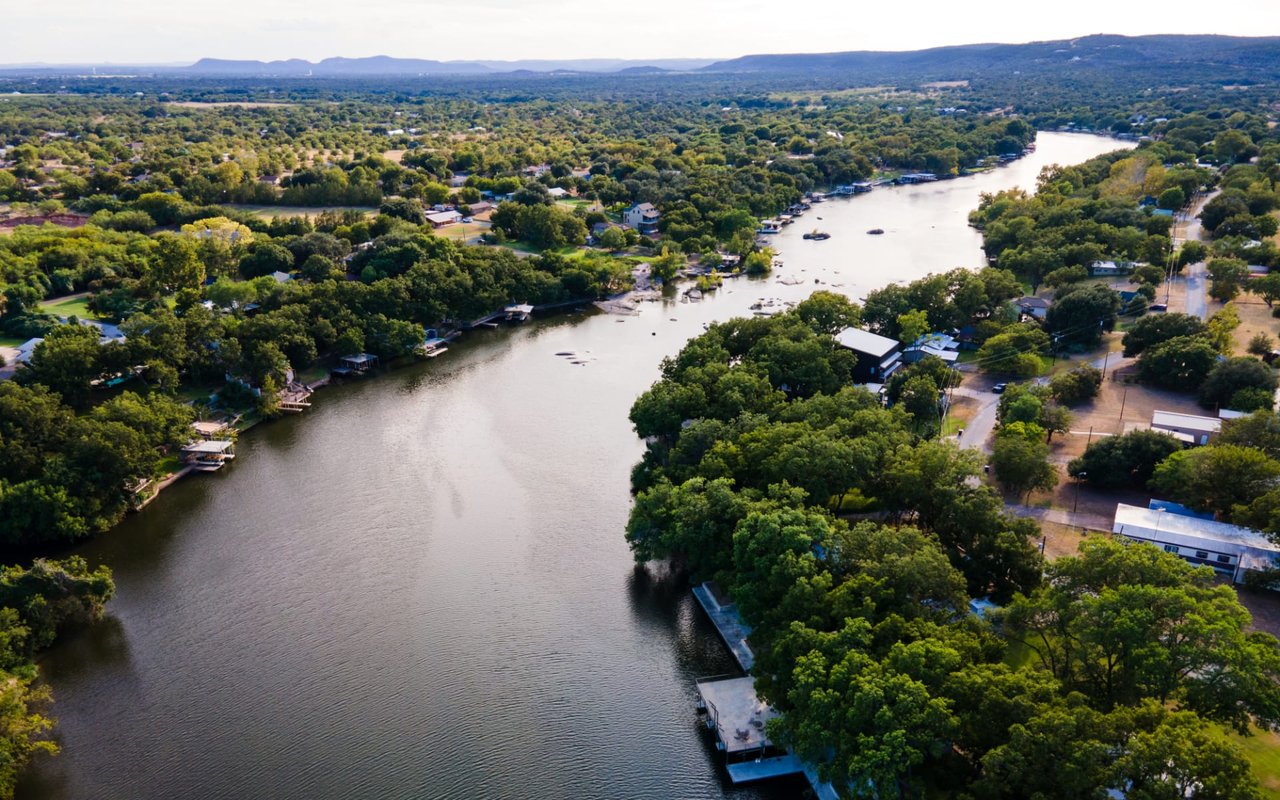
Pull up a Lake LBJ search on any portal and Highland Haven looks like every other Highland Lakes address: waterfront frontage, mature oaks, a boat launch, a small-town zip code shared with Marble Falls. The median price sits inside the same band as Kingsland and Sunrise Beach. On paper, it reads as a substitute.
It isn't. The reason isn't lifestyle or luxury cachet. It's a single line in the city's ordinances that quietly rewires who can buy here, what they can do with the property, and how the resale comps behave.
Highland Haven is one of the only incorporated cities on Lake LBJ that flatly prohibits short-term rentals. Once you understand what that does to the buyer pool, everything else about the market here starts to make sense.
The rule that rewrites the comp set
Most Lake LBJ submarkets carry an implicit second income stream. A buyer running the numbers on Kingsland or parts of Granite Shoals can pencil in weekend and holiday rental revenue, and that expected yield sits inside the offer they're willing to write. The list price on a similar house in Highland Haven has no such support underneath it.
Strip the investor bid out of a small market and two things happen. First, the price you see is closer to what owner-occupiers and traditional second-home buyers are actually willing to pay, not what a rental spreadsheet says the property could earn. Second, turnover slows, because owners who bought to live there tend to hold longer than owners who bought to rent. That's the mechanism behind the "quiet streets" language every write-up about Highland Haven leans on. It isn't just character. It's a direct consequence of the ordinance.
For a buyer relocating from Austin or Dallas, the practical translation is this: if part of your acquisition thesis was offsetting carry cost with rental income, Highland Haven is not the neighborhood where that math works. If you want a lake house that behaves like a house rather than a small business, it's one of the few places on Lake LBJ where the rules are on your side.
Who that leaves in the buyer pool
The demographic profile follows from the rule, not the other way around. The City of Highland Haven covers a small footprint, and the 2020 Census counted 452 residents across 206 households, with a median age in the low seventies and an average household size of 2.19. The Handbook of Texas entry describes it as a retirement community, which understates how deliberately that character has been maintained.
What that means at the closing table:
- Offers are usually cash or conventional, not investor-structured with rental income underwriting.
- Sellers have often owned for a decade or longer, so disclosure conversations skew toward long-tenure items like older docks, updated septic, and additions that predate current permitting.
- The buyer sitting across from you is more likely comparing Highland Haven against a golf villa in Horseshoe Bay or a hilltop lot in Marble Falls than against a rental portfolio.
None of this makes Highland Haven cheaper or more expensive as a rule. It makes the price signal cleaner. What a house trades for here is closer to what someone who intends to live in it thinks it's worth.
The stack of smaller rules that reinforce the character
The rental ban is the load-bearing wall. A handful of smaller ordinances hold up the same posture:
- Fireworks are prohibited inside the city limits at all times, per city ordinance.
- Park access is not automatic. The Highland Haven Property Owners Association owns and operates the six parks around the shoreline, and use requires a resident sticker or a guest pass. Dove Park has the deluxe boat launch capable of handling large craft; Oriole Park handles kayaks and canoes.
- A voluntary water-conservation reduction is currently posted on the city's site through the end of 2026. Buyers evaluating a property with heavy irrigation loads or a new pool should read that as a signal, not a formality.
- City tax rates run at the lower end for the area, which the Board of Alderman sets annually. Meetings are the first and third Tuesday of each month at 7 p.m. at the Community Center behind City Hall.
Read those five items together and the picture sharpens. A city with 452 residents, no fireworks, no short-term rentals, permit-controlled park entry, and an active conservation posture is not trying to grow into something bigger. It's trying to hold onto what it already is. Buyers who share that posture do well here. Buyers who don't tend to sell inside three years and lose the transaction costs.
Where the transaction actually gets sticky
For readers close to writing an offer, the friction points in Highland Haven cluster around three overlapping authorities: the city, the Lower Colorado River Authority, and the HHPOA. A dock or shoreline improvement can touch all three, and the permit history rarely lives in one place.
| Item to verify | Where it lives | Why it matters at closing |
|---|---|---|
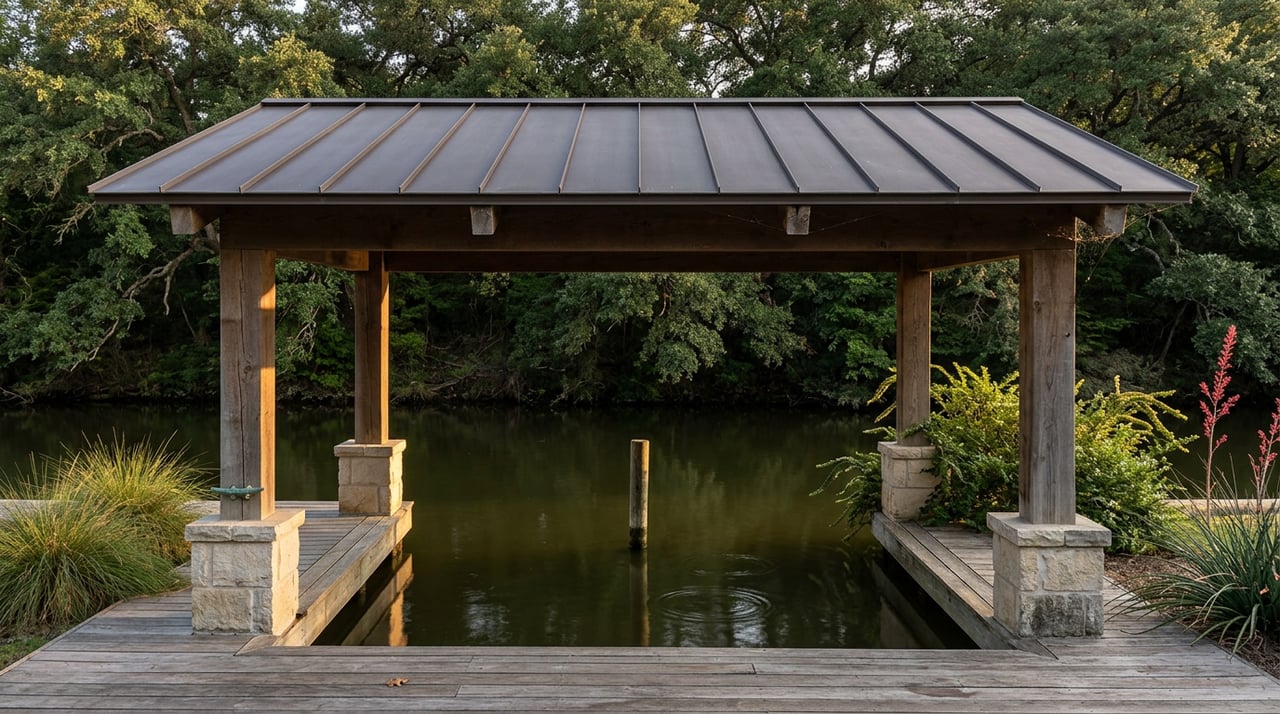
| Dock or boathouse permits and prior shoreline work | City of Highland Haven and HHPOA files, plus any LCRA approvals | Older docks may predate current standards. Rebuilding on the original footprint is easier than expanding it. |
| Water and sewer service | City of Highland Haven for water; septic on many older lots | Some parcels are on septic. Age and last inspection date should be in the seller's disclosure. |
| Park sticker eligibility | HHPOA | Non-waterfront buyers rely on park access for their launch. Confirm the sticker transfers cleanly. |
| Total tax load | Burnet Central Appraisal District | The bill combines city, county, school (Marble Falls ISD), and special districts. Model the whole stack, not just the city line. |
| Shoreline elevation and any lakebed structures | LCRA and county records | Lake LBJ is a pass-through lake with no flood storage. Improvements at or near the 825-foot contour deserve a closer look. |
Sellers who have owned for twenty years often have the original permit paperwork in a filing cabinet rather than a title company folder. Ask early. A survey and a walk of the shoreline with the current owner is worth more than any inspection line item.
The lake itself is doing what the marketing says
One thing the portals get right: Lake LBJ holds its level. It's a pass-through reservoir in the Highland Lakes chain, and the state's own reservoir tracker had it at 98.3% full as of July 2, 2026. LCRA announced in September 2025 that it did not plan to lower LBJ during that drawdown cycle, and the agency has shifted routine drawdowns from winter to fall to protect hydroelectric capacity during peak winter electricity demand.
What that means for a Highland Haven buyer specifically: the near constant-level story you read in the marketing copy is holding up in the current data, and the next scheduled drawdown risk lives in the fall calendar rather than January and February. If you're planning a dock repair or a bulkhead project, the window has moved. Confirm with LCRA before contracting the work.
A short FAQ
Does the short-term rental ban apply to a whole-summer lease to one family? The ban targets short-term rentals in the vacation-rental sense. Long-term leases are a different category. Confirm the specific lease term against current city ordinance language before you commit either direction.
Can a buyer challenge or grandfather an existing rental use? Highland Haven's ordinance is enforced at the city level. Grandfathering claims in Texas STR disputes have not fared well when the underlying zoning or city code prohibits the use outright. This is a question for a Texas real estate attorney, not a listing agent.
Is Highland Haven inside Marble Falls ISD? Yes. The 78654 zip code is shared with Marble Falls, and MFISD serves the address. Verify the specific attendance zone with the district for any given property.
How does the tax picture compare to unincorporated Lake LBJ addresses? The city line is low, but the total bill layers Burnet County, MFISD, and any applicable special districts on top. Pull the parcel history from Burnet CAD and model the full stack before you compare to an unincorporated comp.
Highland Haven rewards a specific kind of buyer: someone who reads the rental ban as a feature, values a small full-time neighbor base, and wants the lake experience without the weekend churn. If that description fits, we can help you evaluate specific waterfront and interior lots against comps in Kingsland, Sunrise Beach, and Horseshoe Bay, and walk the permit and shoreline history before you write. Reach out to McAlister Realty to request a market consultation, and we'll build the comp set around what you actually want the property to do.