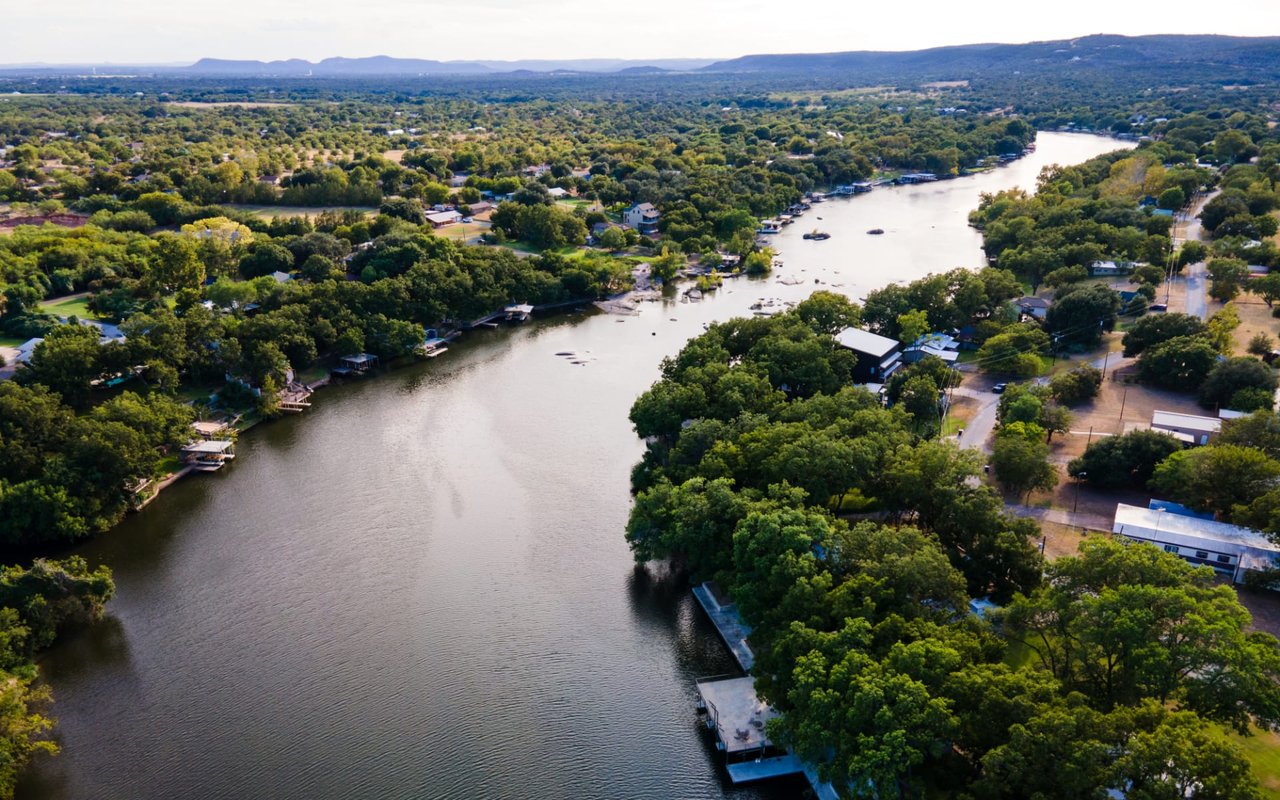
Ask an agent showing a Lake LBJ listing in Granite Shoals whether the lake ever drops, and you will likely hear that it is a constant-level lake, full stop, no further questions needed. It is the single most repeated line in Highland Lakes marketing, and it is the reason waterfront lots on this stretch of the Colorado River carry a premium over comparable footage on Lake Travis or Lake Buchanan. It is also not what the agency that runs the lake actually says.
The Lower Colorado River Authority, which controls every dam and gate between Lake Buchanan and Austin, addresses this directly on its own public FAQ page: none of the Highland Lakes are constant-level lakes. Not one. LCRA groups Lake LBJ with Inks, Marble Falls, and Austin as "pass-through" lakes, meaning they are operated within a narrow range under normal conditions but are built to be drawn down and refilled on purpose, and to fluctuate involuntarily during a flood.
That distinction is not a technicality for anyone deciding between a Granite Shoals lot and a comparable one on a true water-supply reservoir. It is the mechanism that explains both why LBJ frontage costs what it costs and what a buyer should actually verify before writing an offer.
The dam is doing a job, not making a promise
Lake LBJ sits behind Wirtz Dam, one of six Highland Lakes dams LCRA operates for hydroelectric generation, flood control, and water supply, alongside Buchanan, Inks, Starcke, Mansfield, and Tom Miller. Water passes through Wirtz on its way toward Lake Marble Falls and eventually Lake Travis. That is the pass-through part. LBJ is held relatively full most of the time because doing so serves the dam's operating purpose, not because Texas law guarantees it will never move.
The difference matters because Lake Travis and Lake Buchanan are designed to fluctuate, sometimes by tens of feet, to absorb floodwater and bank supply for dry years. LBJ, Inks, Marble Falls, and Austin are not built to hold that kind of swing. That is a real and meaningful engineering distinction. It is just a different claim than "constant level," and the gap between the two claims is exactly where a buyer's due diligence should live.
The lowering nobody puts on the listing sheet
LCRA periodically draws down each pass-through lake by design, releasing water so property owners can dredge, repair retaining walls, and fix or rebuild docks in dry conditions. This is not hypothetical. Lake LBJ was lowered four feet in January and February of 2017. It was lowered again after the historic October 2018 flooding that washed out the RM 2900 bridge over the Llano River near Kingsland and drove an estimated $30 million in FEMA claims across the region. Because so much shoreline damage remained unrepaired a year later, LCRA took the unusual step of lowering LBJ for a second consecutive year, dropping it another four feet from late December 2019 through February 2020.
A Marble Falls newspaper covering the program in 2020 described the routine cadence as roughly once every four years, absent a flood that forces an unscheduled drawdown. By that math, LBJ was due for another lowering sometime around 2024. Instead, LCRA's most recent public lowering was Inks Lake, drawn down eight feet from October 1 through late November 2025, with the agency stating plainly that it did not plan to lower any other pass-through lake, including LBJ, that year. Based on LCRA's public announcements, Lake LBJ's own last scheduled drawdown remains 2020, which puts it well past the interval the agency itself described a few years ago.
That is not a red flag. It is information. A dock or retaining wall that has not had a low-water repair window in six years is carrying six years of wear that a buyer cannot inspect from a boat, because the water is covering the part that matters.
Before you write an offer on Granite Shoals waterfront, ask the seller for the dock's LCRA permit number, its last inspection or repair date, and whether that permit transfers with the sale.
What this looks like on the ground in Granite Shoals
Granite Shoals sits on the north side of Lake LBJ, spread across a long list of established subdivisions, from Sherwood Shores and its component sections like Greenbriar, Castle Hills, and Bel Air, to Emerald Cove, Oasis Heights, Circle B Estates, Woodland Hills, Tanglewood, and the waterfront Tropical Hideaway condominiums. That variety of subdivisions sits on a shoreline shaped by narrow inlets and channels, which is where LCRA's dock rules become practical rather than abstract.
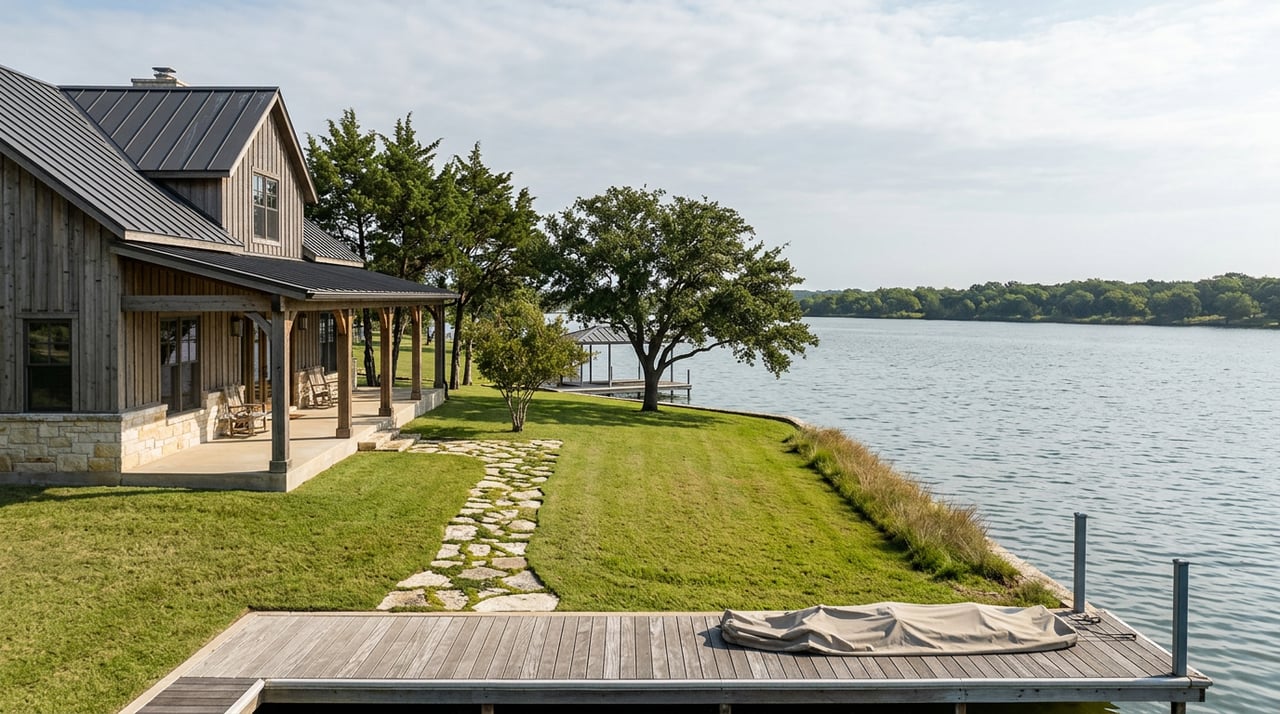
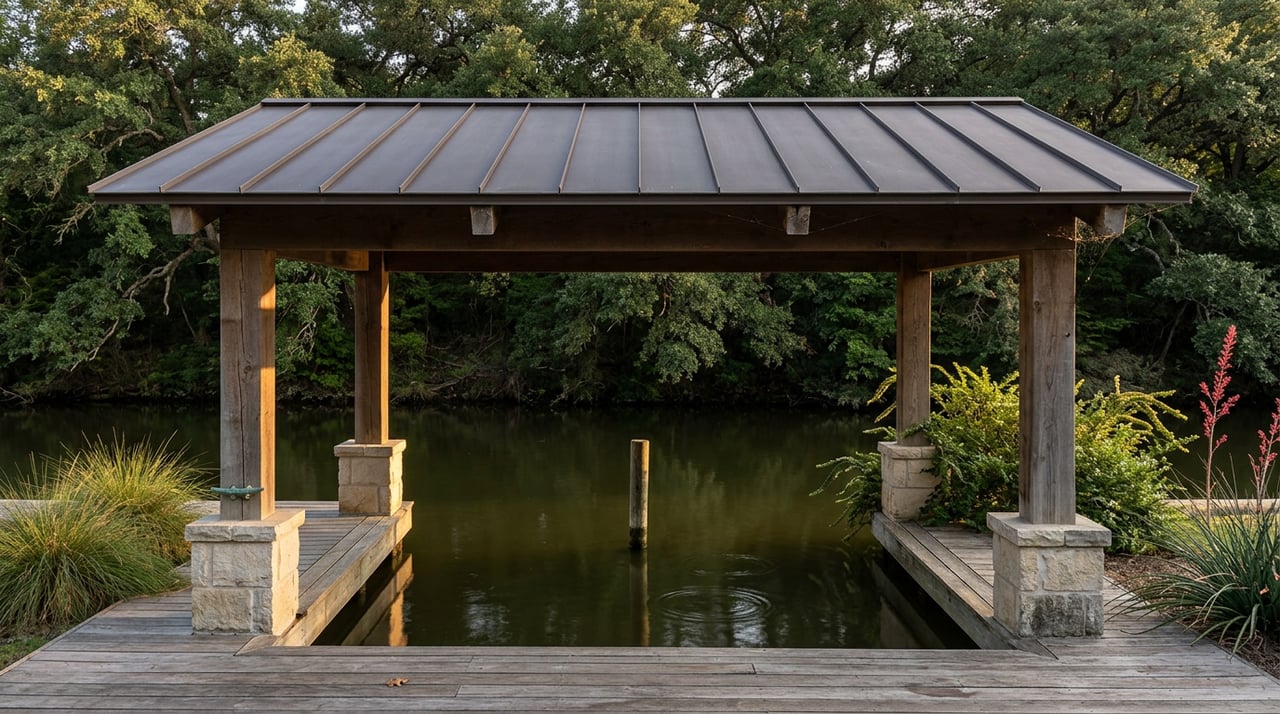
LCRA caps how far a residential dock can extend from shore, and the distance differs by lake. It also enforces a 40-foot rule for coves: if a cove measures less than 40 feet across, including any dock already built on the opposite bank, a new dock in that cove has to be recessed rather than extended. On a shoreline as carved up as Granite Shoals, that rule can be the difference between a lot that supports a full-size boat slip and one that does not, regardless of what the listing photos show at full pool.
Infrastructure adds a second layer of friction. Granite Shoals is served primarily by its own public utility district for water, and a meaningful share of lakefront lots, particularly in older sections, still rely on septic systems permitted directly through LCRA rather than a city sewer connection. That is a normal condition of buying on this part of the lake, but it is also a step that surprises buyers moving from municipal-utility markets, and it belongs in the inspection timeline, not as a closing-week discovery.
What the price actually buys
Granite Shoals is priced as the value entry point onto Lake LBJ, and the numbers back that up, though they scatter more than a single median suggests. In the most recent 30-day window this summer, active Granite Shoals listings carried a median list price of $479,000, while the handful of homes that closed in that same window sold at a median of $455,000 after roughly 104 days on market. Looking at the trailing twelve months through mid-2026, the median sale price across Granite Shoals came in at $438,000, up 29 percent year over year, with homes typically taking around 151 days to sell against a national average closer to 58 days.
That last figure is worth sitting with. Granite Shoals is not a bidding-war market. It rewards a buyer willing to watch a listing for a season rather than one competing on day one.
| Snapshot | Window | Median price | Typical days on market |
|---|---|---|---|
| Trailing 12 months | through mid-2026 | $438,000 (up 29% year over year) | ~151 days |
| Recent 30-day solds | summer 2026 | $455,000 | ~104 days |
| Active listings | summer 2026 | $479,000 asking | 142 days on market |
The spread between a $438,000 twelve-month median and average listing prices well north of $650,000 across broader aggregator counts comes down to mix. A three-bedroom cottage a few blocks from the water and a 128-foot open-water lot with a boat slip and lift are both counted as Granite Shoals real estate, and they are not buying the same thing. The premium over the town median is not paid for a Granite Shoals mailing address. It is paid for specific frontage: open water rather than a narrow channel, a dock that already clears the 40-foot rule, documented permits rather than an unknown history.
That is the same logic that separates Granite Shoals pricing from Horseshoe Bay pricing on the same lake. Horseshoe Bay's premium buys resort infrastructure and curated shoreline positioning. It does not buy a different regulatory promise about the water itself, because LCRA does not make that promise to any address on Lake LBJ.
A short FAQ
Will Lake LBJ get lowered again soon? LCRA reviews pass-through lake drawdowns annually each fall and has not announced one for LBJ since 2020. Buyers should check LCRA's lake lowering page for the current year's plan before assuming the water in front of a listing will look the same in twelve months.
Does a scheduled lowering affect an existing dock permit? No permit is required to repair a dock during a drawdown, but retaining wall work, dredging, and other shoreline projects do require registering with LCRA. Confirm any existing dock's permit is current and ask whether it transfers to a new owner.
Why do some Granite Shoals lots still have septic systems? Much of Granite Shoals is served by a public utility district for water with limited sewer buildout, so lakefront lots, especially in older sections, often rely on septic systems permitted through LCRA rather than city sewer. Factor septic inspection and permitting into your timeline the same way you would a foundation inspection.
Granite Shoals rewards a buyer who reads past the marketing line and asks what the lake is actually built to do. That is the kind of question we help clients answer every day, lot by lot and cove by cove, because the difference between a listing sheet and a closing table is usually a handful of specific details like these. If you are comparing addresses on Lake LBJ and want a straight read on what a particular shoreline can and cannot promise, McAlister Realty is glad to walk it with you. Reach out to request a market consultation, and Tara will help you sort the engineering from the marketing before you make an offer.