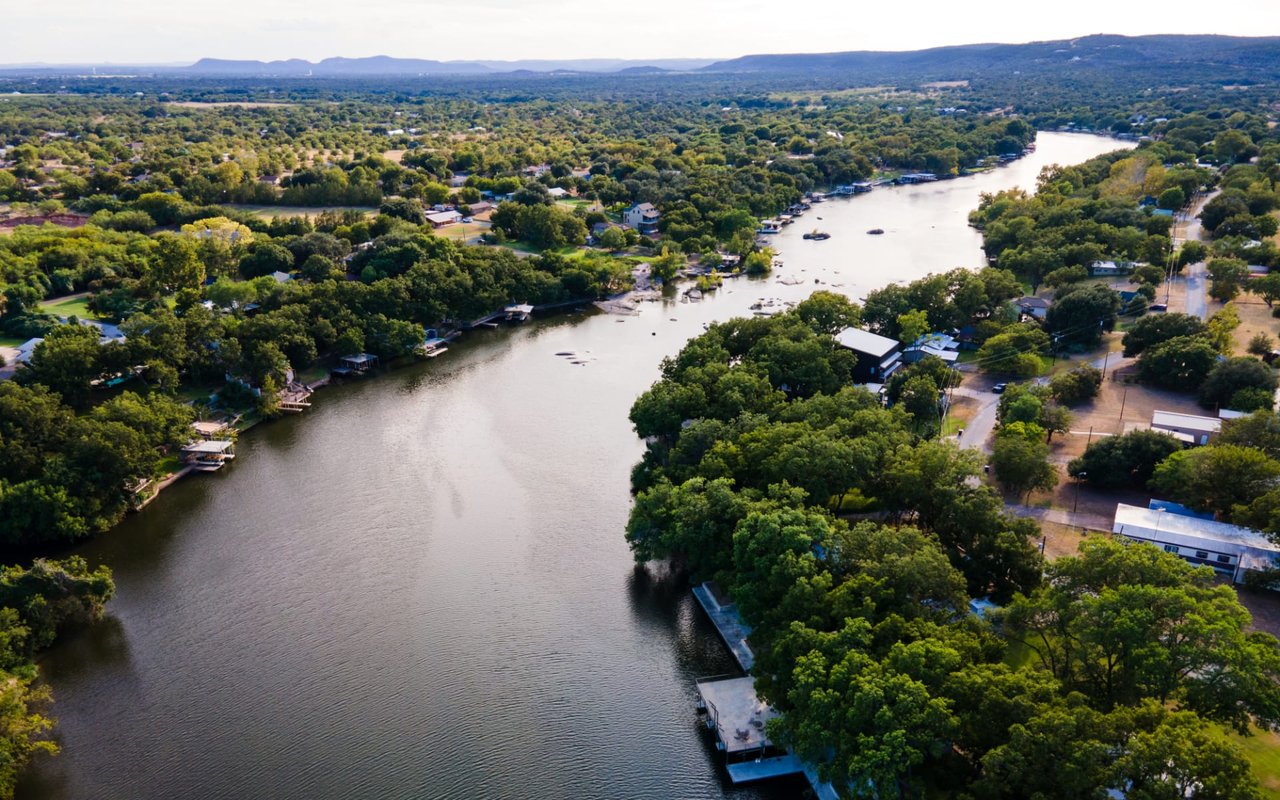
Scroll through listings on the eastern shore of Lake LBJ and you'll eventually hit a line that looks like a typo: HOA fee, none. Buyers who've shopped Horseshoe Bay or Meadowlakes assume it's a data entry gap, the kind of blank field an agent forgot to fill in before the listing went live.
It isn't a gap. The Highland Haven Property Owners Association states it plainly on its own site: no dues or assessments under its current policy. No one on staff collects a paycheck from member fees, because there is no staff. Six volunteers run the board. The question worth asking before you write an offer isn't whether that's true. It's what actually pays for the parks, the boat launch, and the community center if nobody's writing a monthly check.
The parking lot that pays the bills
Highland Haven's answer is almost mechanical in its simplicity. The HHPOA rents storage. According to the association's own accounting, it maintains 40 covered and 41 uncovered trailer and RV spaces, plus 15 storage sheds, all available to members for a rental rate the association describes as reasonable. That income, along with donations, covers the association's entire operating budget. There's no reserve fund built from monthly assessments, no line item labeled "HOA dues" on a closing statement.
It's a workable model precisely because Highland Haven's amenities are modest by design. A parking lot full of boat trailers can fund mowing, insurance, and basic upkeep. It cannot fund a clubhouse renovation or a new dock system, and the association has never pretended otherwise.
One park finished, five still waiting
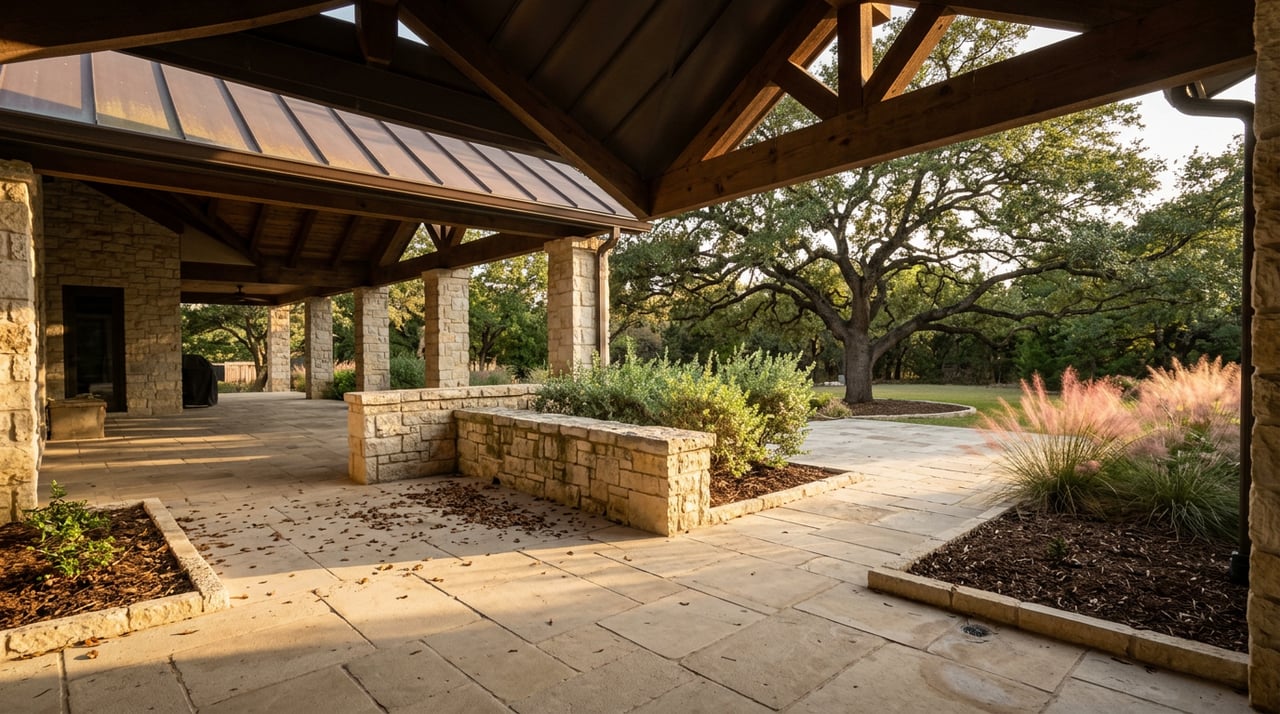
The HHPOA manages six parks along the shoreline. Only one, Dove Park, is fully developed, complete with a boat launch built to handle larger lake craft. The other five exist, but the association's own materials don't describe them as complete in the way Dove Park is.
That's not an oversight. It's what a volunteer-and-rental funding model produces over time. Development happens when rental income, donations, and volunteer hours line up, which means it happens unevenly and on nobody's calendar but the board's.
For a buyer, that's the real trade to understand:
- What the no-dues model reliably funds: routine park mowing, the trailer and RV storage program, basic community center upkeep, and the six-member board's modest administrative needs
- What it doesn't guarantee: a fixed timeline for finishing the other five parks, a large capital reserve for major repairs, or paid staff to handle anything the volunteers don't get to
Neither of those lists should read as a warning. They read as a description of a town that decided, decades ago, to keep its overhead close to zero and accept a slower pace of amenity buildout in exchange.
The HHPOA looks less like a homeowners association collecting dues and more like a small nonprofit that happens to rent parking spaces.
A city government running on four employees
The POA isn't the only lean operation in Highland Haven. The town itself, incorporated as a city in 1995 after operating as a subdivision since 1962 and a property owners association since 1976, runs as a General Law Type A municipality with a mayor and five aldermen. According to the city's own site, only four positions draw a paycheck: a City Administrator, a City Secretary, an Administrative Assistant who doubles as Utility Coordinator, and a part-time Building Permit Official.
The Board of Aldermen meets the first and third Tuesday of each month at the Highland Haven Community Center, a building that sits behind a City Hall dedicated to a past mayor, Roscoe L. Holt. Right now, that same small staff is also the one posting the city's water-use notices, with a voluntary reduction tied to lake conditions currently in effect through the end of the year.
This matters for a buyer because it's easy to conflate the city and the POA into one entity. They're legally separate. The city collects property tax through the county and handles streets, water, and permits. The POA collects no dues and handles recreation. Both operate lean, but they're lean for different reasons and answer to different governing documents.
The currency residents pay instead of dues
If dues aren't changing hands to keep Highland Haven running, something else is. That something is time. The Highland Haven Ladies Club funds its own calendar of events, including a monthly community potluck, by selling a local telephone directory and running periodic fundraisers rather than collecting membership fees. A Bridge Club meets under its own volunteer coordinator. A Sunshine Committee sends cards to residents dealing with illness or loss. A Welcome Committee hands new residents an information packet instead of a bill.
Even the practical mechanics of using the parks run on a volunteer basis. Residents get their park stickers from a named community volunteer who handles that task for the association, not from a management company processing a fee. It's a system that works because enough residents show up to keep it working, which is a different kind of obligation than an invoice, but an obligation nonetheless.
What this means if you're comparing Lake LBJ towns
Highland Haven has no mandatory fee, but also no guarantee that six parks will ever all look like Dove Park at the same time.
Neither approach is objectively better. A buyer who wants predictable, professionally maintained amenities on a fixed budget may find the mandatory-fee model easier to plan around. A buyer who wants lower fixed carrying costs and doesn't mind that community upkeep depends on neighbors showing up to a Tuesday meeting may find Highland Haven's model closer to what they actually want. What both buyers deserve is to understand the mechanism before they assume "no HOA" means "no obligations at all."
A short FAQ
Is the no-dues policy something the HHPOA could change later? The association currently has a no-dues policy. Buyers who want certainty on this point should request the current bylaws and any recent membership meeting minutes before closing.
What happens if a major repair costs more than rental income and donations can cover? The HHPOA's public materials don't describe a reserve fund built for large capital projects, which is consistent with a model funded by ongoing rental income rather than assessments. Any major expense outside routine upkeep would likely require either a special fundraising push or a change to how the association funds itself.
Are the city's water and property tax bills separate from anything the POA might ever charge? Yes. The City of Highland Haven collects property tax and handles utilities and permitting as a municipal government. The HHPOA is a separate entity focused on recreational parks and storage, and its current no-dues policy has no bearing on municipal tax bills.
Highland Haven's version of lake living was built by people who preferred a parking lot full of boat trailers to a stack of assessment notices. If that kind of town sounds like where you want to be, or you're weighing it against another stretch of the Highland Lakes shoreline, McAlister Realty knows the difference between the two systems from the inside. Request a Market Consultation with Tara and her team to talk through what a specific Highland Haven property actually costs to own, beyond the number that isn't on the listing sheet.
This article is general information, not legal, tax or financial advice. Consult a qualified professional about your situation.